In October 2026, the Fight4CE – Fighting Energy Poverty in Central Europe project, funded under the Interreg Central Europe programme, will get underway. The project focuses on energy poverty and on strengthening local and regional action in support of a just energy transition.
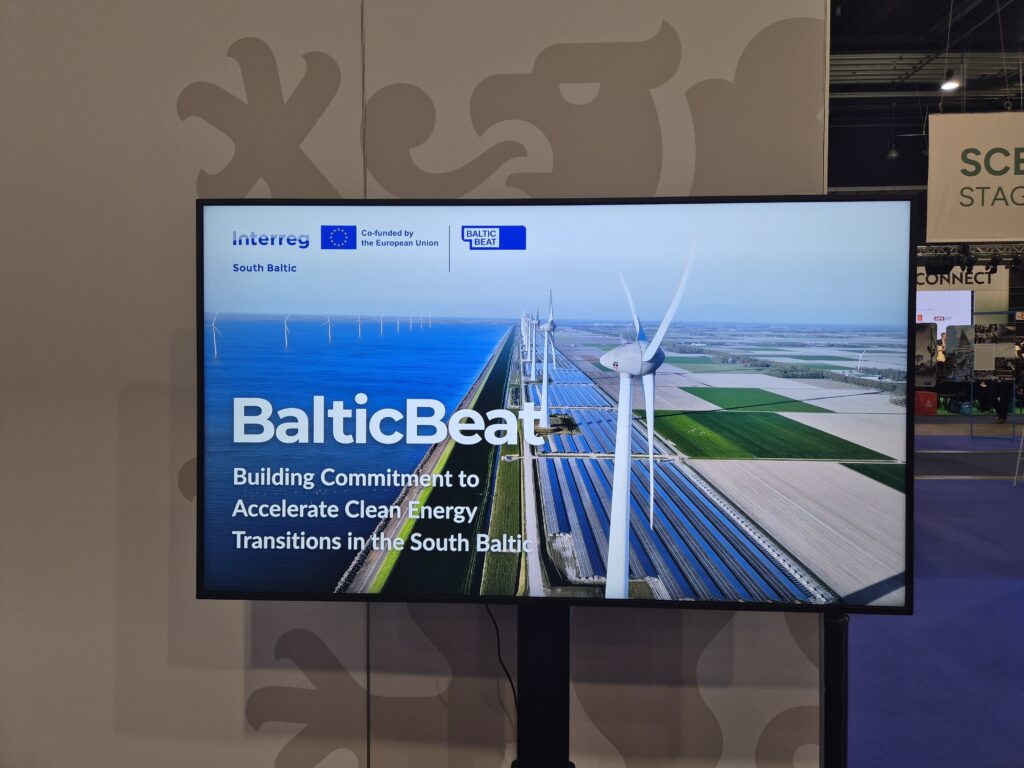
As part of the ongoing BALTICBEAT project, the University of Gdańsk is leading the consortium. The experience gained through BALTICBEAT, together with the solutions developed within the project, contributed to UG being invited to join the new initiative alongside partners from Central Europe. Fight4CE will also provide an opportunity to build on and further develop the results of previous cooperation.
“The solutions developed by the UG team have been recognised by partners from Central Europe, and the University was invited to participate in a new project, one of whose aims is to make use of and further develop the results of previous Interreg projects”, says Prof. Sylwia Mrozowska, project manager on behalf of the University of Gdańsk.
Fight4CE addresses one of the challenges associated with the energy transition: the situation of households and communities that have limited access to adequate energy services or experience difficulties in meeting the associated costs.
Particular attention will be paid to border regions. In these areas, differences between countries – including regulatory frameworks, economic conditions and social circumstances – can affect how the problem is identified and which support instruments can be applied.
The project partners will work on solutions that can provide a more consistent understanding of energy poverty across different parts of Central Europe. One area of cooperation will be the development of a common approach to defining and measuring energy poverty. The solutions developed through the project are also intended to help local and regional authorities identify risks and plan and implement appropriate measures.
One of the key contributions of the University of Gdańsk will be to build on its experience with the online platform currently being developed as part of the BALTICBEAT project, which supports local and regional authorities in their energy transition efforts.
Within Fight4CE, the platform will be expanded with solutions designed for partners and users from Central Europe. These will include expert resources, advisory services and training opportunities. The University of Gdańsk will also contribute to bringing together the results of previous projects so that they can be made available through the joint solution developed within Fight4CE.
“The solutions available through the platform, such as specialised knowledge, advisory services and training, will be expanded and adapted to the needs of Central European regions. The University of Gdańsk will also be responsible for integrating selected results of previous projects into the joint Fight4CE platform”, adds Jolanta Mrozek-Kwiatkowska, project coordinator responsible for its implementation.
The project will be implemented by partners from five Central European countries. The project leader is the Local Energy Agency Spodnje Podravje from Slovenia. The consortium also includes the University of Gdańsk, BORA 94 – Borsod-Abaúj-Zemplén County Development Agency from Hungary, IRENA – Istrian Regional Energy Agency Ltd. and the North-West Croatia Regional Energy and Climate Agency from Croatia, as well as the Central European Initiative – Executive Secretariat from Italy.
At the University of Gdańsk, the project will involve teams from the Institute of Political Science at the Faculty of Social Sciences and the Institute of Computer Science at the Faculty of Mathematics, Physics and Computer Science.
The project at the University of Gdańsk is headed by Prof. Sylwia Mrozowska with Jolanta Mrozek-Kwiatkowska serving as project coordinator. Prof. Jakub Neumann and Aleksandra Tejszerska-Rzeźnik will be responsible for the IT development of the platform.
Almost EUR 900,000 has been allocated to the implementation of Fight4CE, including EUR 200,000 for the University of Gdańsk. The project will run for 18 months.
The partners’ joint work is intended to result in practical tools and solutions for local and regional authorities. Their use should make it easier to assess the scale of energy poverty, identify factors that increase the risk of its occurrence, and develop measures tailored to the needs of individual regions.
An important principle of the project is to connect energy transition measures with their social consequences, ensuring that issues related to access to energy and the situation of local communities are taken into account when planning and implementing energy transition measures.
See also: the University of Gdańsk news article (in Polish).