Report
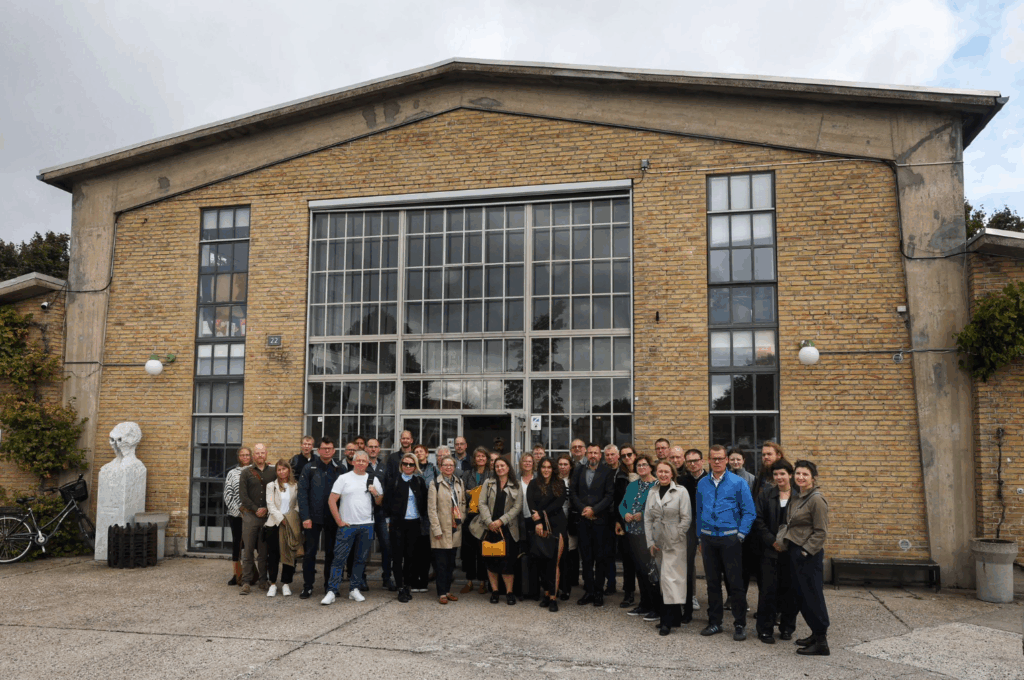
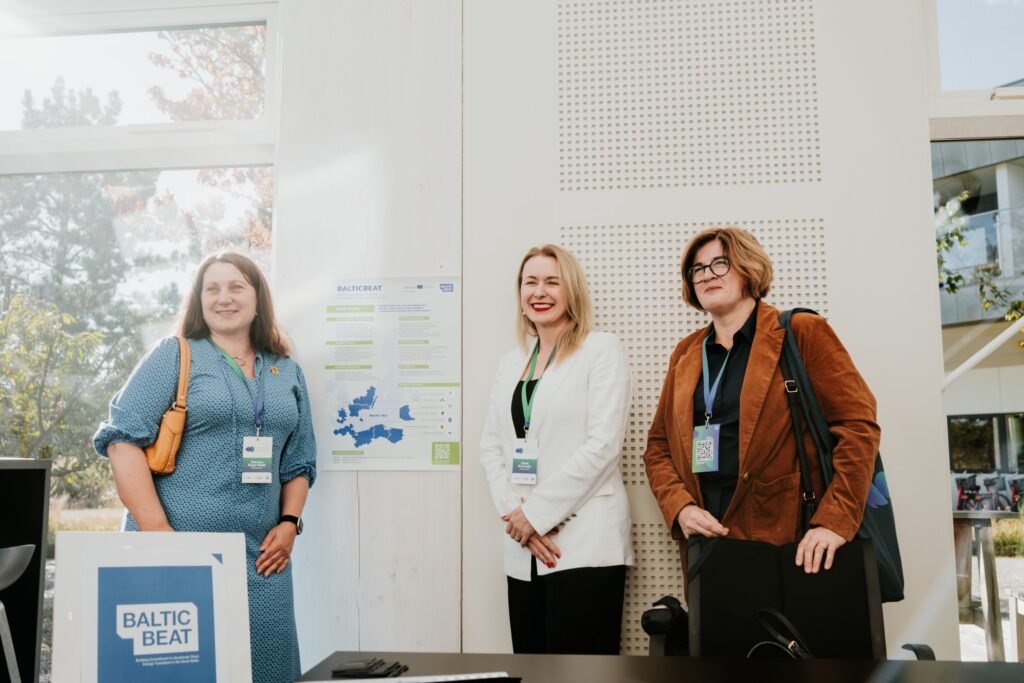
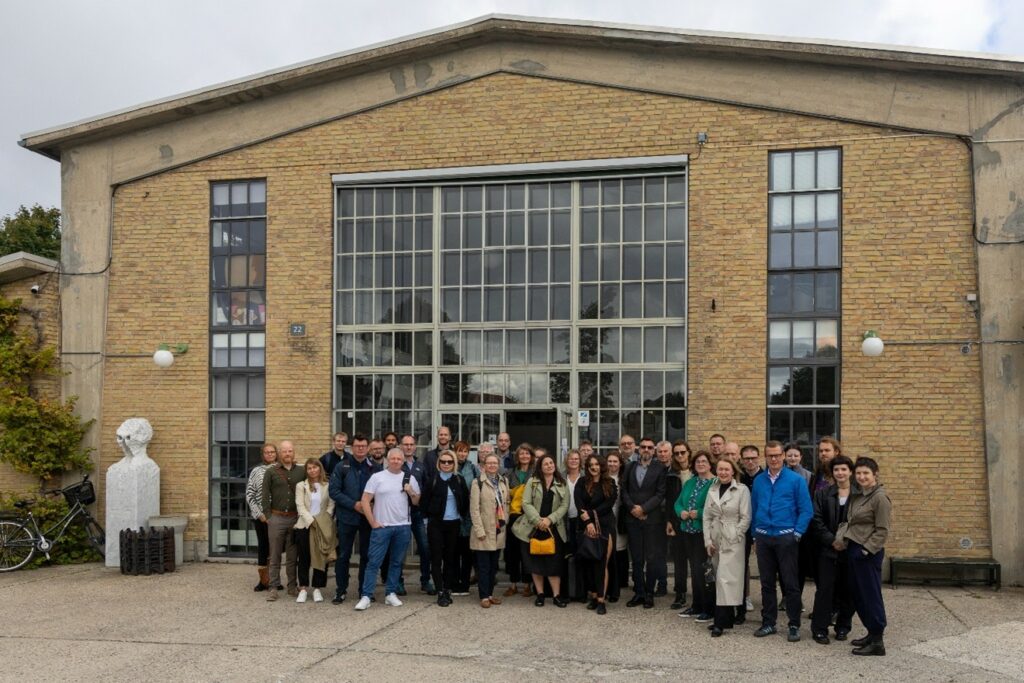
BALTICBEAT – a project study trip to Denmark (17–18 September 2025) was organised to explore Danish experiences in the creation and operation of energy communities. The undertaking was implemented with funds from the BALTICBEAT project – Building Commitment to Accelerate Clean Energy Transitions in the South Baltic, co-financed by the Interreg South Baltic 2021-2027 program.The programme included visits to rural and urban communities and familiarisation with the regulatory framework, support systems, and instruments assisting the development of energy communities. A total of 35 people, who were representatives of the project consortium as well as guests from local government institutions, representatives of energy communities and small businesses, participated in the visit.
During the meetings, the experiences of various stakeholders (see the attached visit programme) related to the establishment and operation of energy communities were presented, including organisational issues, resident involvement, access to financial resources, as well as challenges related to the management of existing initiatives.
Another important goal of the study trip was to create a space for presenting good practices and fostering mutual learning. The visit was a significant step towards strengthening cross-border cooperation for the development of energy communities in the Baltic Sea region.
Day one 17/09/2025
1. A walk through Avedøre
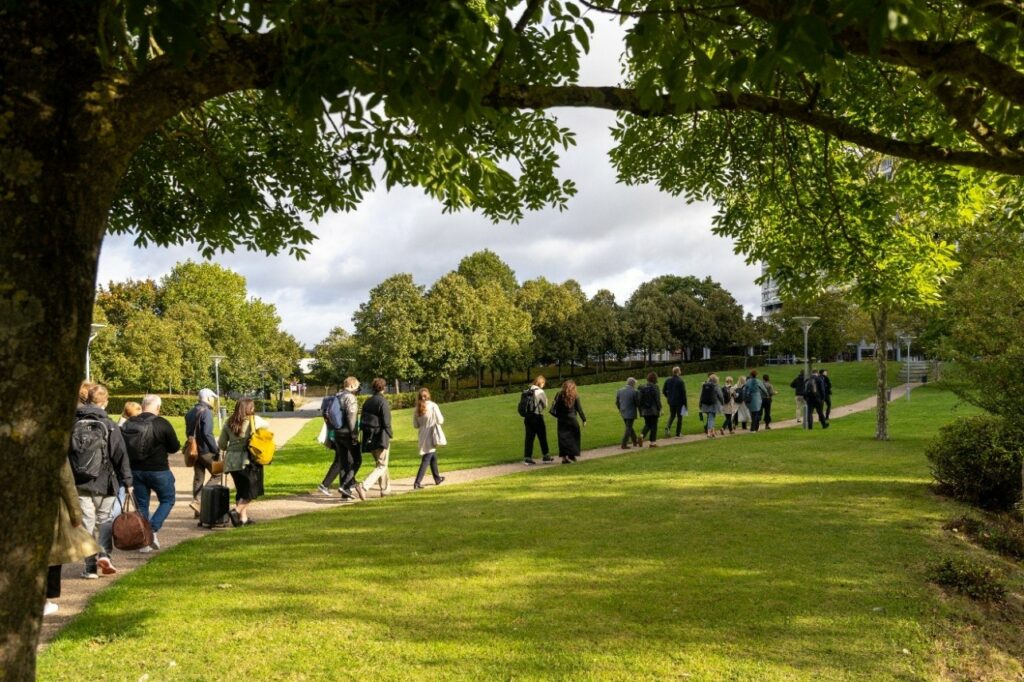
The first day started with a guided walking tour through the neighbourhood of Avedøre located in the municipality of Hvidovre, southwest of Copenhagen. The area host two interesting project where local communities and actors are actively engaging in renewable energy projects: Avedøre Holme and Energifællesskabet Avedøre energy community.
Avedøre Holme is one of the largest industrial zones in Denmark, home to several hundred companies from various industries, from logistics, food manufacturing, to modern technology. It became the site of a significant experiment. In March 2023, an energy cooperative was established there, in which 19 companies joined forces to optimise energy consumption and develop local production from renewable energy sources. Analyses have shown that it is possible to cover up to 79% of energy consumption from own sources and achieve up to 97% self-sufficiency in production versus consumption.
The initiative aims not only to reduce emissions and implement energy transition, but also to create a greener and more competitive industrial area. The problem is that current regulations do not allow the largest companies to formally participate in energy communities. Therefore,
Avedøre Holme and the municipality of Hvidovre are actively working to change the regulations that would enable the full operation of this energy cooperative.
The Energifællesskabet Avedøre energy community was established in 2021 as part of the Avedøre Green City project, financed by EU funds in the amount of DKK 22 million. The project’s goal was to engage residents and businesses in the production and consumption of renewable energy, in line with the idea of sustainable development and support for the implementation of the 2030 Agenda. Members of the energy community include Avedøre Fjernvarme, Avedøre Boligselskab, Filmbyen (Zentropa), as well as public institutions such as Hvidovre Gymnasium and the municipality of Hvidovre. The project includes photovoltaic (PV) installations and heating ventures, which make it possible to gradually decarbonise the local energy system. A central element of the initiative is the promotion of democratic and collaborative energy management.
The community operates on a non-profit basis, aiming to generate environmental, economic, and social value. Environmentally, it seeks to increase the proportion of renewable energy sources; economically, it strives to align local energy production with consumption; and socially, it fosters cooperation among residents, institutions, and businesses. Avedøre has become an inspiration for other municipalities in Denmark – in 2025, the initiative was honoured with the Green Power Prisen, awarded by Green Power Denmark[1] for grassroots community involvement in the green transformation[2]
The first day of the visit began with a walk in Avedøre with Stephan C. Krabsen, Vice President of Energy Communities Denmark, who discussed the development of the Avedøre Energy Community and its role within the broader Avedøre Green City initiative.
The following issues were discussed during the walk:
Biodiversity and Citizen Engagement
One of the first examples of building a sense of community among residents was a local biodiversity project where children and residents participated in planting seeds along a stream bank to foster local involvement: “They invited all the children from the kindergartens from the area to come here and… participate in seed planting… we tried to involve the residents to encourage the young ones to get involved.”
Social housing and cooperative models
Avedøre’s Big House is part of a resident-owned housing cooperative that strengthens local involvement in energy initiatives. This model supports investments in electric car charging points, run jointly by the housing cooperative and the energy community: “The organisation is actually owned by the people who live here, which… makes it a little easier to foster that local involvement.”
EU support and large-scale renovation
Thanks to support from the EU’s ELENA programme, the community coordinated the renovation of the heating infrastructure with the renovation of buildings: “We received €11 million… to coordinate the renovation of the heating network with the renovation of buildings.”
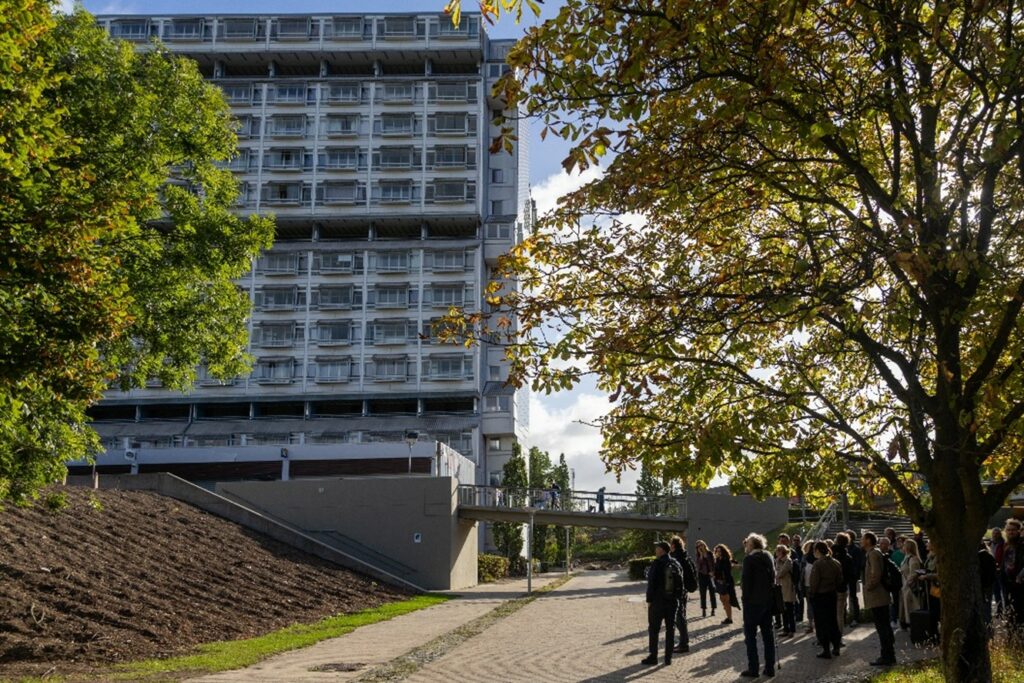
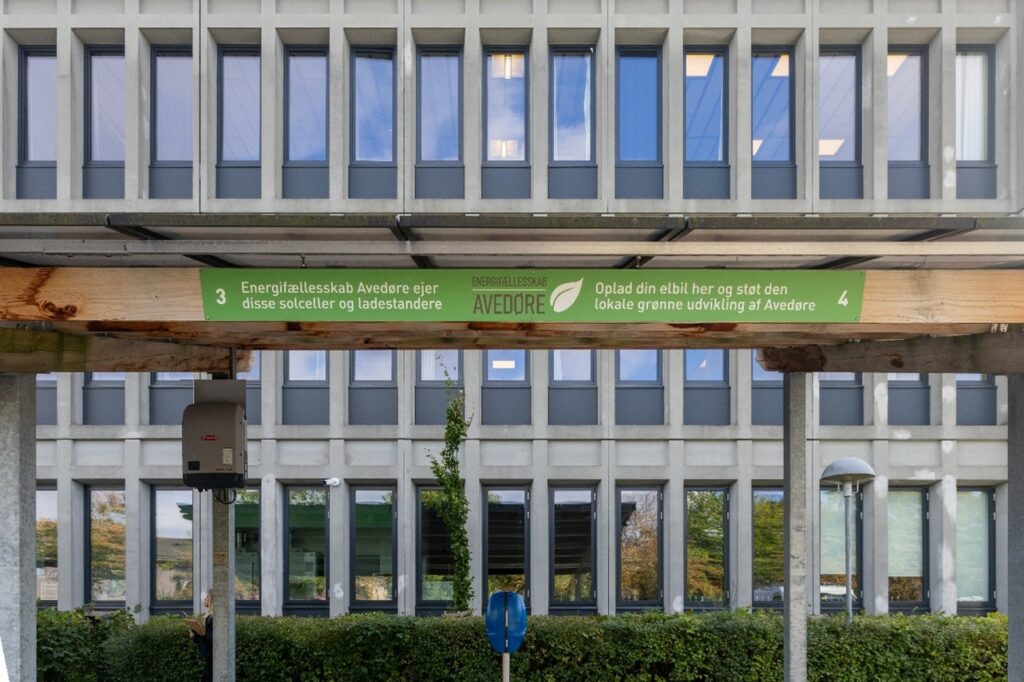
Visible symbols of the energy community
Small solar installations and charging points are tangible expressions of community activity. Their visibility is crucial for communication and trust: “It was very important for the residents to see that the energy community actually exists… The Avedøre energy community owns these solar installations and charging points. Charge your electric vehicle here and support the local ecological transition.”
Youth education and engagement
Local schools participate in the project, providing photovoltaic installations and using the data for teaching purposes. Students learn about democratic business models and the importance of citizen-owned energy structures: “We shared the data with the students, and they used it in the lectures… we tried to explain to young people what these local corporations are and how important it is to engage in such structures.”
Ownership vs. outsourcing
A key theme was the difference between citizen-owned infrastructure and outsourcing to commercial operators like Clever. Despite initial challenges, local ownership proved more beneficial: “It might seem easier to just let others take care of it, but then you lose the value for the local community.”
Technical and behavioural challenges
Lowering the temperature of district heating required not only infrastructure but also the cooperation of consumers, which remains a challenge: “We are trying to lower the temperature from 75 to 60 degrees… but if consumers do not have the appropriate installations, we cannot lower the temperature.”
Overcoming bureaucratic barriers
The energy community also supported local actors in navigating the bureaucracy during solar panel installation, ensuring the implementation of the projects despite heritage constraints: “The energy community helped and facilitated… we managed to install the solar panels here and at the secondary school… It took a really long time.”
2. Johnni Andersen – Zentropa
Summary of the presentation by Johnnie Andersen, local resident and board member of the Avedøre Energy Community.
Personal experiences
Johnni Andersen described his long-standing connection to Avedøre, where he was born and raised, and his personal journey from running a camera shop to becoming an advocate for energy communities: “I intend to live here until my last day, when I will sit under my beloved apple tree with a very cold beer in my hand and say that this has been an incredibly good life”.
Early challenges
He explained how difficult it was to establish one of the first energy communities in Denmark due to unclear regulations and legal barriers to sharing electricity through the power grid: “We were the first in Denmark and probably in Europe… there were so many things we asked the government about, and they had no idea”.
Simplification of processes
The initial billing and administrative processes were overly complex, potentially discouraging consumers. Efforts were made to simplify invoices and procedures: “We received an invoice that was, I think, 17 pages long… That shows how much we need to simplify our processes, because if we tried to sell this to ordinary consumers, they would definitely refuse.”
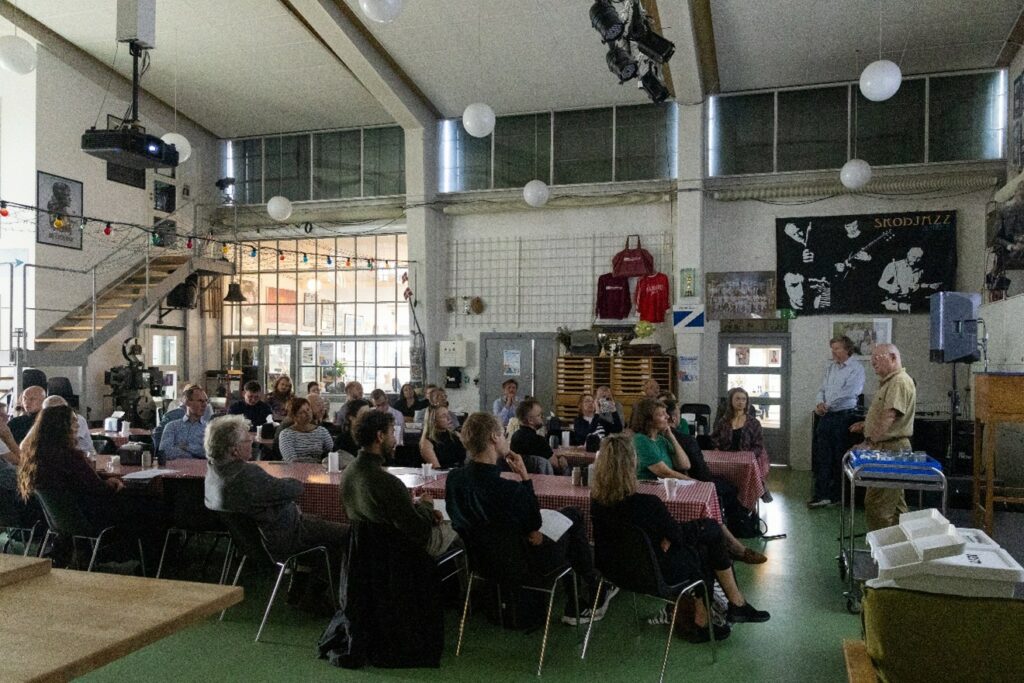
Convincing the neighbours
Andersen emphasised the importance of honesty and realism when encouraging neighbours to join. He stressed the importance of avoiding overpromising and focusing on community values: “Don’t try to tell people this will cut their energy bills by half, because it won’t… but you’ll be part of a community where you’re providing energy to your neighbours and helping develop green energy.”
Regulatory obstacles
He described numerous bureaucratic obstacles, from restrictions on solar installations to difficulties in negotiating with municipalities on heating solutions: “Their installation wasn’t allowed… and it took so much time and so much research to prove it was possible.” Barriers included legal regulations, complex procedures, technical and legal constraints, difficulties in working with the administration, and public resistance to energy initiatives.
Community psychology
Andersen emphasised the psychological and social dynamics of energy communities: citizen initiatives often meet with authorities’ resistance, while large corporate projects provoke opposition from local residents: “When an idea comes from citizens, the community opposes it. When ideas come from the community, people oppose them”.
Political involvement
He described his decision to join a political party and use personal contacts to influence decision-makers and achieve regulatory change: “It’s a lot easier to pick up the phone, call him, and say, ‘Hey, you need to do something,’ than to write to someone in the office, who goes to their boss, who goes to their boss, and so on.”
Citizen-initiated changes
Andersen concluded his presentation with a call for perseverance and collective action, presenting energy communities as part of a broader green energy grassroot revolution: “If you look at all these green initiatives… if you treat them as a revolution, you have to remember that revolutions always start with ordinary people coming together”.
3. Anders Kjærhauge (CEO) & Peter Mygdal – Why a film company joins the energy community (Zentropa)
Relocation to Avedøre
In 1999, the Danish film production company Zentropa, moved its headquarters from central Copenhagen to Avedøre Holme. Initially, the suburb was viewed negatively, but over time it became a source of pride and recognition in the international film industry: “When we moved here in 1999, the first thing they said was ‘fucking Avedøre’… but that’s changed. Now we’re very proud to be in Avedøre”.
Impact on culture
The company has produced over 200 films, including Oscar-winning titles, and has made Avedøre the creative hub of Danish cinema: “This is our creative headquarters… if the walls could talk, they would tell the story of the fantastic early project discussions that later turned into great stories and films.”
Motivation to join the energy community
As a manufacturing company, Zentropa values proximity to decision-making and control. The energy community model has allowed the company to better understand and influence energy consumption while reducing its carbon footprint. Annual electricity consumption is 250–300 MW/tonne, which translates to a cost of approximately €75,000. Since April 2023, the photovoltaic system has produced a total of 290 MW/tonne, of which 160 MW/tonne have been consumed on-site, generating savings of €45,000. The surplus of 130 MW/tonne was fed into the grid. The panels save us one-third of the energy costs.
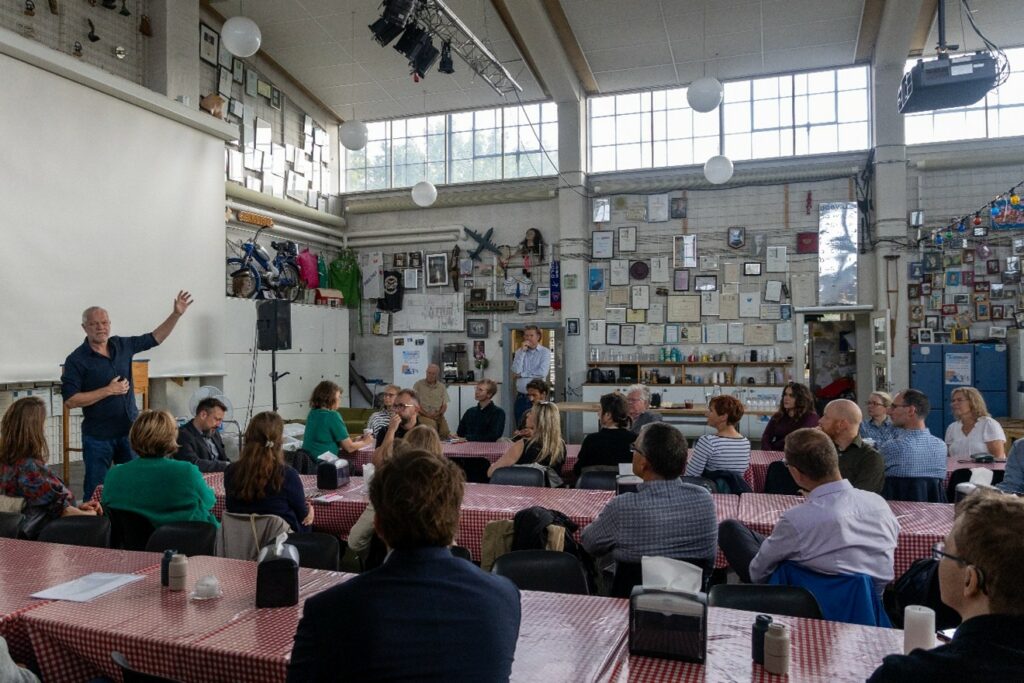
Investing in solar energy
Zentropa has invested in solar panels on the roofs of its buildings, which generate approximately 110 MWh per year. The €150,000 investment supports both sustainability goals and financial savings, especially when combined with participation in the energy community.
Charging infrastructure
The company also invested in electric vehicle charging stations for employees, using surplus solar energy to support green mobility. This created a small revenue stream and encouraged employees to use electric cars: “We built our own charging stations… when we have solar power, we actually make money… and the rest of the time we’re just nice to the employees.”
Regulatory and industry pressure
Zentropa acknowledged that film production will have to meet more stringent sustainability requirements in the future. Participating in the energy community helps them adapt to these expectations: “In the coming years, demands will be made for us to care about the environment when making films”. Companies from the television and cinema industry have signed a document entitled Nordic Ecological Standard (NES), in which they commit to reducing the impact of the audiovisual industry on the environment [BK].
4. Stephan C. Krabsen – practical capacity building
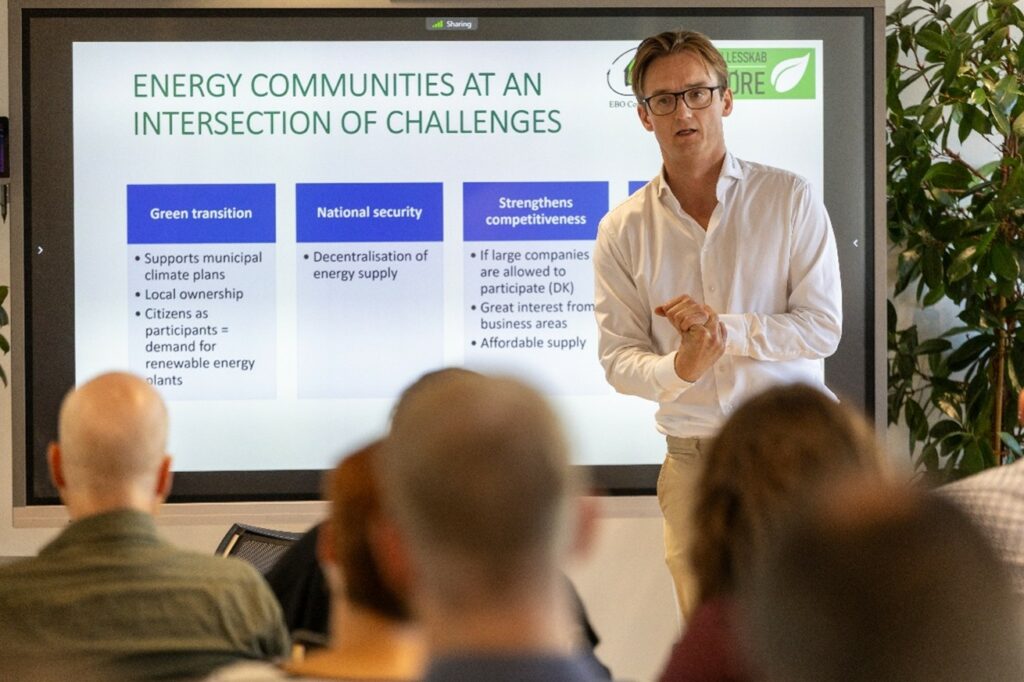
Stephan C. Krabsen, General Director of EBO Consult and Vice President of Energy Communities Denmark.
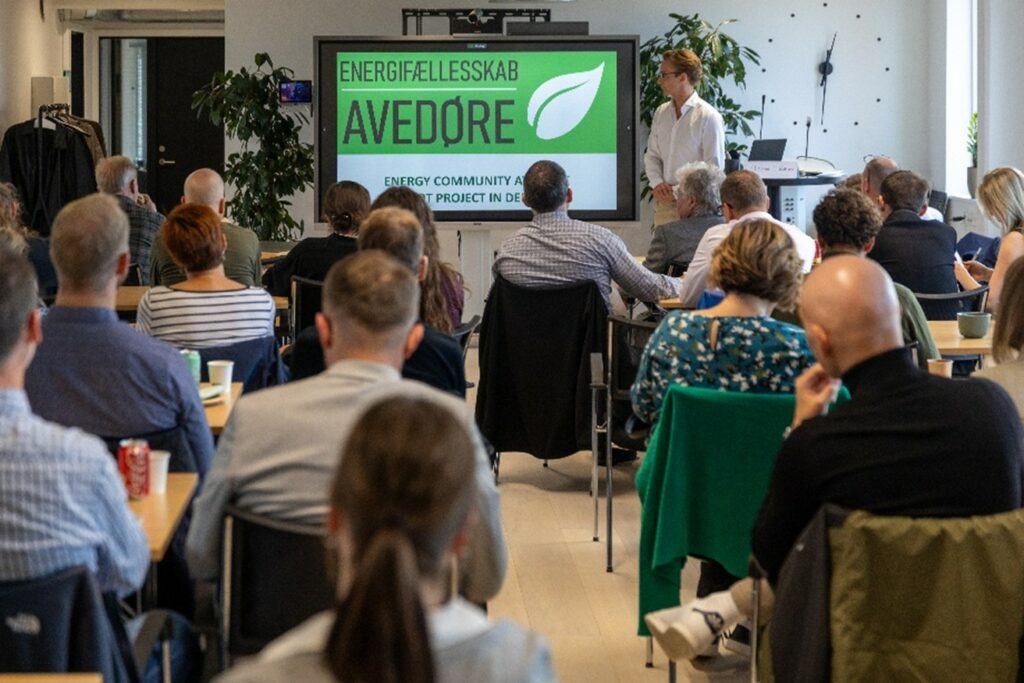
Introduction and Context
Stephan Krabsen introduced EBO Consult as a company with years of experience in heating cooperatives, now expanding its operations to energy communities. EBO Consult helps design and manage community energy systems: “We are a company that works towards ecological, local, efficient, and sustainable energy supply”.
The Avedøre energy community
The Avedøre Energy Community, founded in 2021 as part of the Avedøre Green City initiative, is one of the first of such communities in Denmark. After a long development phase, it started its operation in August 2024: “The Avedøre Energy Community is the first energy community in Denmark and was founded in November 2021… we started sharing energy on 28 August last year.”
Goal and values
Energy communities operate on a non-profit basis, prioritising social, environmental, and economic benefits over profit. They provide affordable electricity, reinvest surpluses, and build social cohesion: “It isn’t the goal of the energy community to optimise profits. It has a value-based purpose… instead of profiting from your shares, you get cheap electricity or reinvestment in new infrastructure.”
Social and economic dimension
Local ownership fosters trust and acceptance, helping overcome resistance to renewable energy projects: “When people feel that something belongs to them, they’re more willing to accept it.” Members benefit from more stable and affordable prices compared to the spot market. In 2024, electricity was about 25% cheaper within the energy community: “In 2024, the average price was 0.65… and we’re selling energy for 0.5… so 25% cheaper.”
Technical and regulatory challenges
Krabsen described the bureaucratic hurdles in collaborating with municipalities and the complexity of setting up payment and energy-sharing systems. Grid ownership remains a legal barrier, although Danish law now allows for community energy sharing: “It took about two years to install 30 kilowatt solar panels on the roof of one of the municipal buildings.”
Local projects and joining of sectors
The Avedøre community is integrating photovoltaic panels, batteries, urban heating, and even surplus heat from data centres. Combining these sectors is a key goal consisting of adjusting electricity, heat, and mobility: “We’re currently installing 4,000 square meters of solar panels on a flood embankment… and we’re ready to go. We’re going to install photovoltaic panels and a large battery.”
Membership and Expansion Plans
Currently, six members are actively sharing energy, but the potential covers 7,500 residents. The community plans to expand to include residents once the payment systems and technical structures are ready.
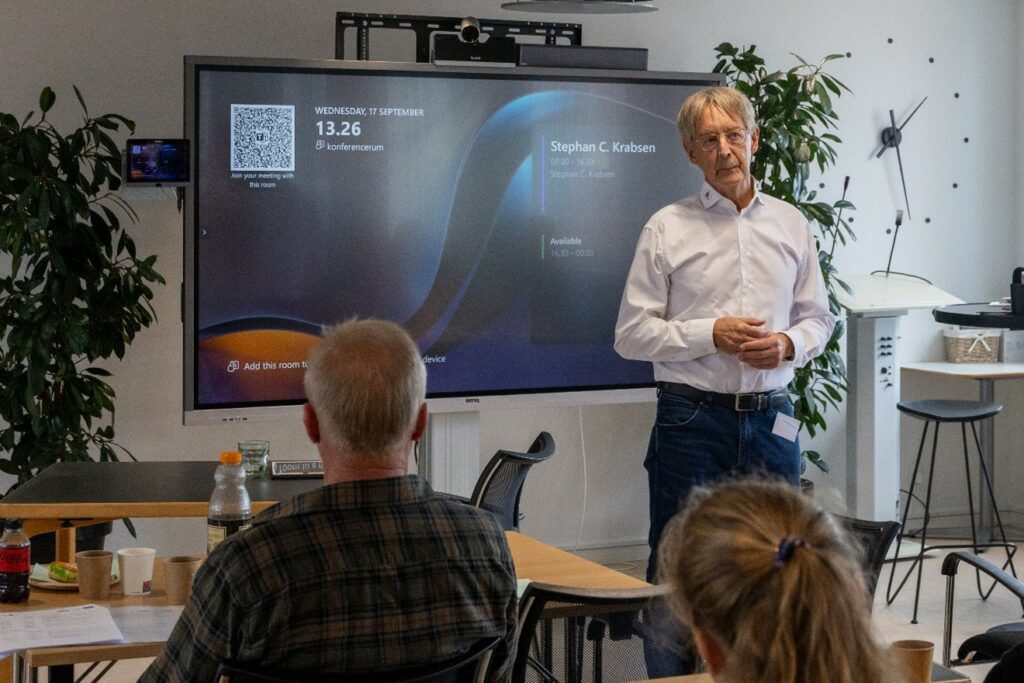
5. Erik Christiansen – the history of Danish energy communities
Erik Christiansen, a lawyer and scientist with extensive experience in Danish cooperatives, has been involved in the establishment of 13 cooperatives, including serving as president of the Ørsted offshore wind cooperative.
The historical development of energy cooperatives
Denmark has a long tradition of energy cooperatives, dating back to local energy associations in the early 20th century. The first cooperatives often arose in villages, where citizens jointly built small generators and district heating systems. “We found… old documents describing how the first energy cooperative was established in a village. This was in 1901… they unanimously decided to do it.”
The impact of EU liberalisation
The liberalisation of the EU energy market in 1999 led to the merger of many smaller cooperatives into larger entities. This reduced local influence but strengthened grid management: “In 1999, the EU electricity market was liberalised… at that time, there were several hundred energy cooperatives operating across Denmark… now we have 60 grid owners.”
Heating cooperatives
District heating has also developed as a cooperative model, often initiated by local residents. Currently, there are approximately 325 district heating cooperatives in Denmark, which are exploring the possibilities of combining the electricity and district heating sectors.
Comparisons with other countries
Christiansen compared Denmark with Sweden and Germany. While Sweden has a centralised system run by municipalities, the cooperative movement in Germany is shaped by religious and political traditions. Denmark, on the other hand, takes an apolitical, community-based approach: “In Denmark, cooperatives are not viewed negatively, because membership or affiliation with a cooperative or energy community is a very important part of society.”
Democracy and citizen engagement
A key driving force behind Danish cooperatives is democracy and trust among citizens. Local involvement creates a sense of responsibility and satisfaction: “If people feel they have a say in decision-making, they are happy to be part of the cooperative.”
EU legislation and new opportunities
The new EU framework for energy communities has revived the cooperative model in Denmark, encouraging citizens to get involved at the local level: “When we started implementing the idea in the REScoop project, we knocked on the Commission’s door and they couldn’t believe what they heard… but then they wanted to increase opportunities for citizens to get involved at the local level”
REScoop[3] – an European federation of energy communities, currently associating around 2,500 energy communities from across Europe and representing over 2 million citizens involved in the energy transformation. The organisation operates on the basis of 7 cooperative principles, which its members apply in their daily practice. It
1) represents the voice of citizens and energy communities to decision-makers at the European level;
2) supports both emerging and existing communities by providing them with tools, contacts, know-how, and development support;
3) facilitates the exchange of experiences and cooperation between communities from various countries;
4) promotes the cooperative model in the energy sector as a way to democratise the energy system;
5) strives for energy democracy – i.e. an energy transformation in which citizens have real influence, participation and benefits from the development of renewable energy sources;
6) members are to apply democratic principles of management and the federation operates in accordance with cooperative values and
7) it operates as a sectoral federation within the structure of “Cooperatives Europe”, which increases its reach and possibilities of cooperation within European cooperative movements.
Types of energy communities
Christiansen explained the difference between citizen energy communities and renewable energy communities. The former can operate remotely, while the latter must be local: “A citizen energy community is a general community… and a renewable energy community must be local”.
6. Charlotte Von Hessberg – Avedøre Energy Community and Avedøre Holme from the municipality’s perspective
The role and involvement of the municipality
The Avedøre Green City project began in 2018 as a collaboration between district heating companies and housing cooperatives, and the municipality became involved later. Unlike typical top-down initiatives, this one was implemented from the bottom up by citizens and housing cooperatives: “Usually, the municipality takes the initiative and wants to involve people, but here it was the other way around, which was very nice”.
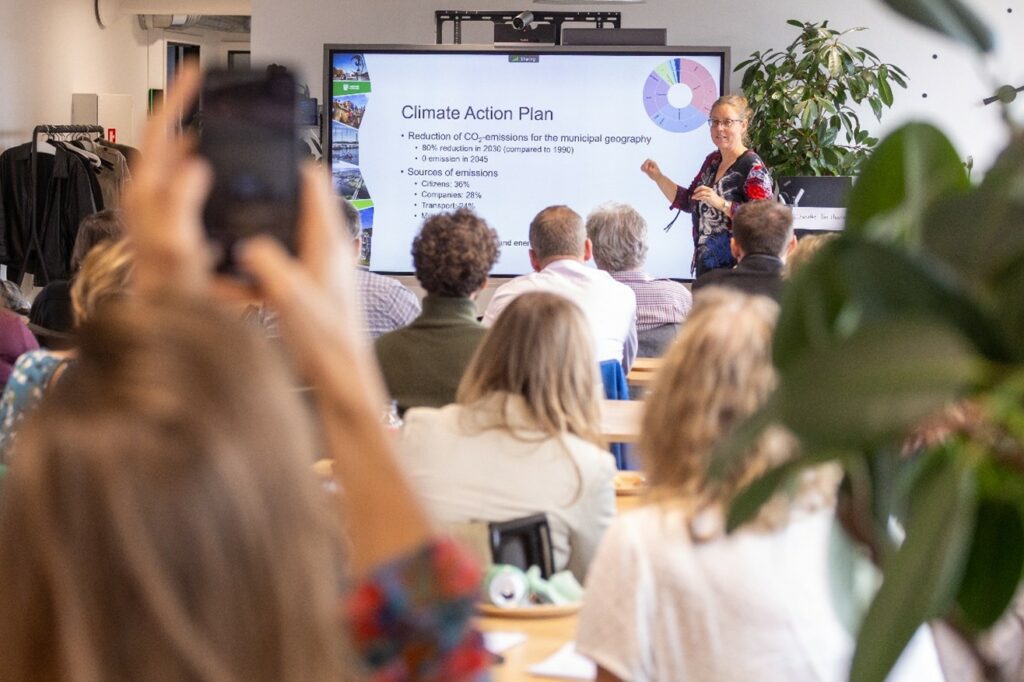
Climate Action Plan
In 2021, Hvidovre Municipality adopted a climate action plan that aims to reduce CO2 emissions by 8% by 2030 (compared to 1990 levels) and achieve net zero emissions by 2045. The plan places emphasis on cooperation with citizens, as the municipality’s activities only account for 6% of total emissions.
The importance of social housing
With 40% of residents living in social housing, their involvement is crucial. Decision-making in this sector is more complex but essential to achieving energy efficiency and decarbonisation goals.
The role of the municipality in the energy community
The municipality joined the Avedøre Energy Community in 2020-2021. It contributes to balancing energy demand, as schools and kindergartens use electricity during the day and households in the evening: “The municipality is an important player… because it consumes energy during the day”.
Photovoltaic ownership and projects
Since municipalities could not directly produce electricity, the energy community took ownership of the photovoltaic panels installed on the roofs of municipal buildings. As a result of this, the benefits remained local and were reinvested in the commons.
Obstacles encountered
Several barriers delayed the implementation: roof load-bearing capacity, legal constraints requiring roof lease agreements, public procurement rules, and administrative requirements for documentation and permits.
Citizen engagement and flexibility
Citizen engagement in energy communities fosters behavioural change, increasing awareness of energy prices and flexibility of consumption: “When people engage in energy communities… suddenly they understand… when there is a surplus of energy in the system? What can I do?”.
Political and economic context
Municipalities’ involvement is shaped by political priorities and economic considerations, as volatile energy prices complicate business analyses. Winning the Green Power Denmark award underscored the importance of collaboration between citizens and municipalities: “This energy community won the Green Power Denmark award a few months ago … they wanted to say that it’s unique that citizens are actually cooperating”.
7. Kasper Larsen – The transformation of Avedøre Holme in the greenest industrial area in Denmark
Context and vision
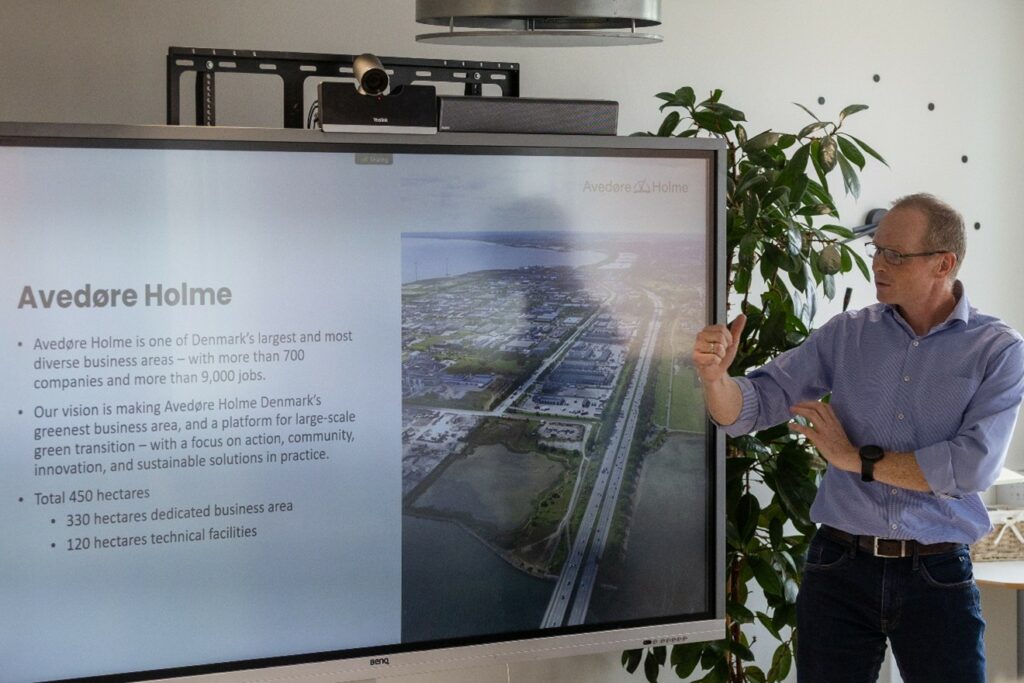
Avedøre Holme is a 450-hectare industrial area with over 700 businesses and approximately 9,000 employees. The strategic vision is to position the area as Denmark’s greenest industrial area, not to compete with others, but to lead in the sustainable development agenda for industrial districts: “Our vision is to make Avedøde Holme the greenest industrial area in Denmark”.
Strategic areas of activity
Larsen outlined three pillars of action: (1) biodiversity (creation of habitats in collaboration with NGOs and impact mapping), (2) circular economy (material and water circulation, including the vision of supplying the area with technical water from treated wastewater), and (3) renewable energy and the environment (self-sufficiency in electricity, demand optimisation, and green transport).
Energy Community Concept and Data Analysis
In 2023, 19 companies (small and large) provided annual electricity consumption data to assess the feasibility and economics of a shared solar and wind energy community. Load profiles are relatively stable over a 24-hour, week, and year cycle, providing a favourable basis for local balancing. Modelling showed that with three 3.5 MW wind turbines and photovoltaic panels installed on approximately 75% of the roofs, the participating companies could meet almost all of their electricity needs and most of the time consume energy during its production. At indicative internal prices, the business analysis showed significant savings for the companies, with a projected total surplus of several million euros per year: “…this would even give us… a surplus of between 4.5 million and 5 million euros per year”.
Benefits beyond costs
The initiative focuses on security of supply, price stability, lower emissions, reducing the load on the national energy grid and cooperation between companies in the sphere of innovation.
Regulatory Barriers and Political Dialogue
The main barrier is that the Danish Electricity Supply Act currently prevents large companies from participating in energy communities, which is a significant restriction given the region’s industrial structure. Larsen noted that even the national energy agency had no substantive arguments against including large companies; the constraint is political in nature. Meanwhile, many municipalities and business areas have expressed support for changing the regulations.
Practical examples and network integration
The plan assumes maintaining a connection to the grid, complemented by flexibility in energy storage and vehicle connection to the grid. Currently, a practical limitation is the impossibility to enter into photovoltaic energy-sharing agreements between neighbouring companies – leading to suboptimal investments and, during periods of negative prices, to restrictions: “We will be connected to the grid… We will sell electricity to the grid 20% of the time and buy it back the other times… We are also considering using vehicles to feed the grid”.
Day two 18.09.2025
Permatopia, Stevns.
Permatopia: a visit to a democratic community and energy community with a wind turbine. The community is a member LØS[4], the Danish federation of eco-communities. LØS was established in 1993 and associates dozens of Danish ecovillages and related initiatives (depending on membership criteria, sources indicate approximately 30–50 communities). Its mission is to support the establishment and development of eco-communities, exchange knowledge, educate, and represent the movement at the national and European levels (LØS is part of the GEN Europe/ECOLISE family).
Permatopia operates a sustainable food system, composts wastewater for fertilisation, and keeps approximately 100 hens essentially, it is food-independent. The development comprises 90 apartments in houses: 23 privately owned, 23 owned by a housing cooperative, and 44 rental units. The buildings are constructed of wood and insulated with approximately half a meter of cellulose insulation, which translates into very low heating demand – an average of about 3 MWh per year per home. The project was completed in 2018. The rent for tenants is approximately DKK 6,000 per month. However, the community determines who can be tenants and members of its community. The houses are not passive but are constructed from natural materials.
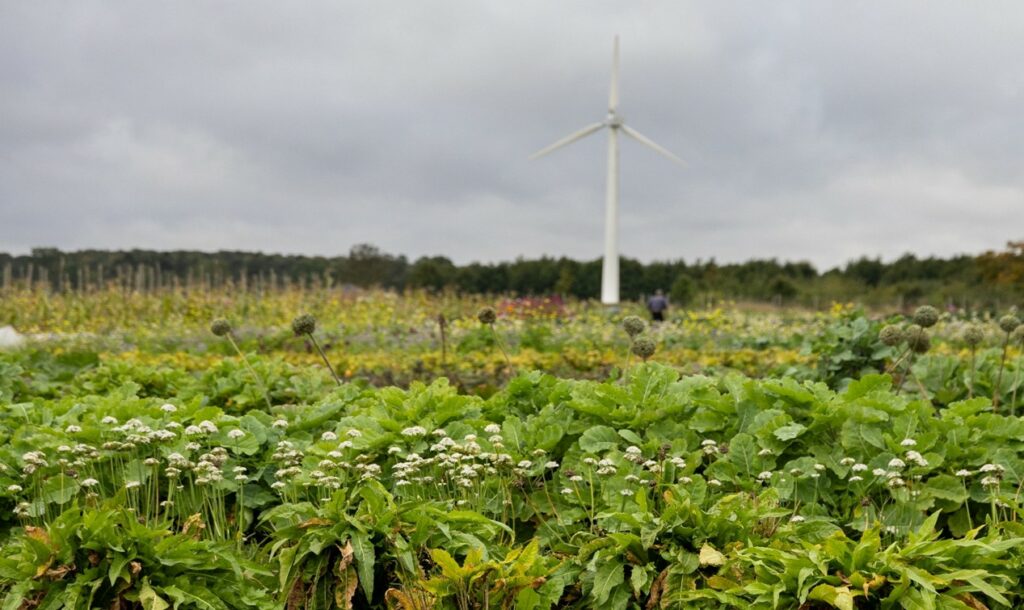
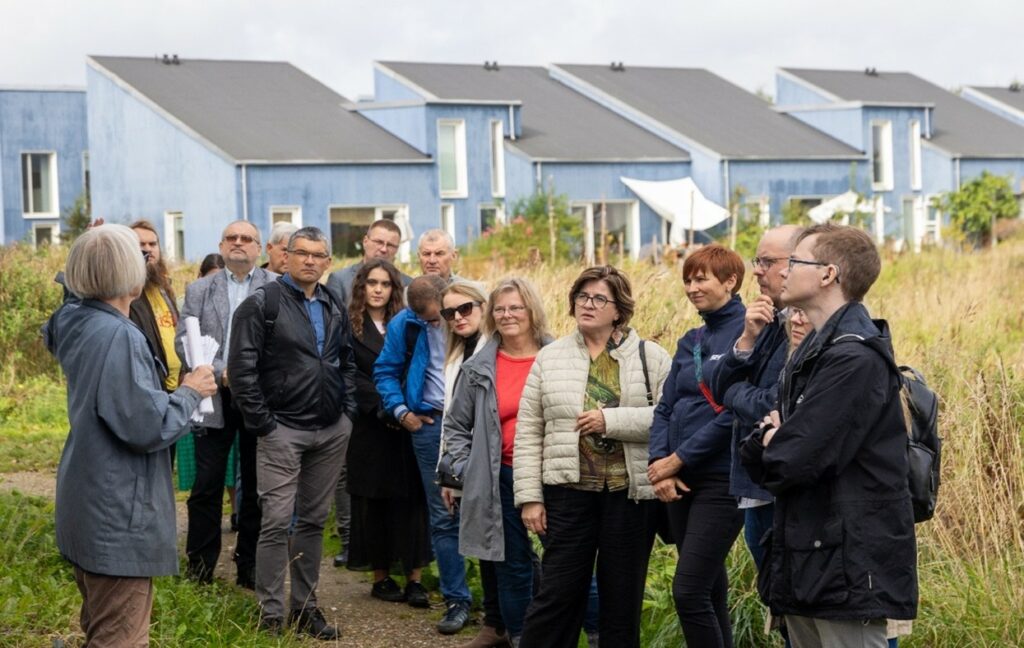
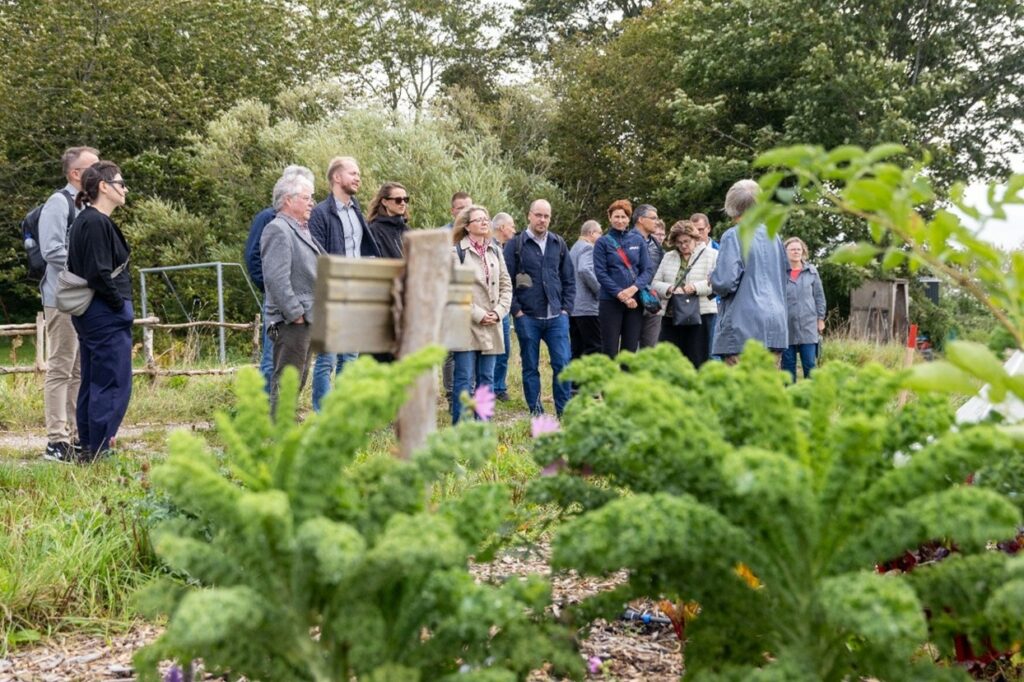
8. Kenneth Harmsø – Permatopia. An ecovillage energy and resource system based on circular economy principles
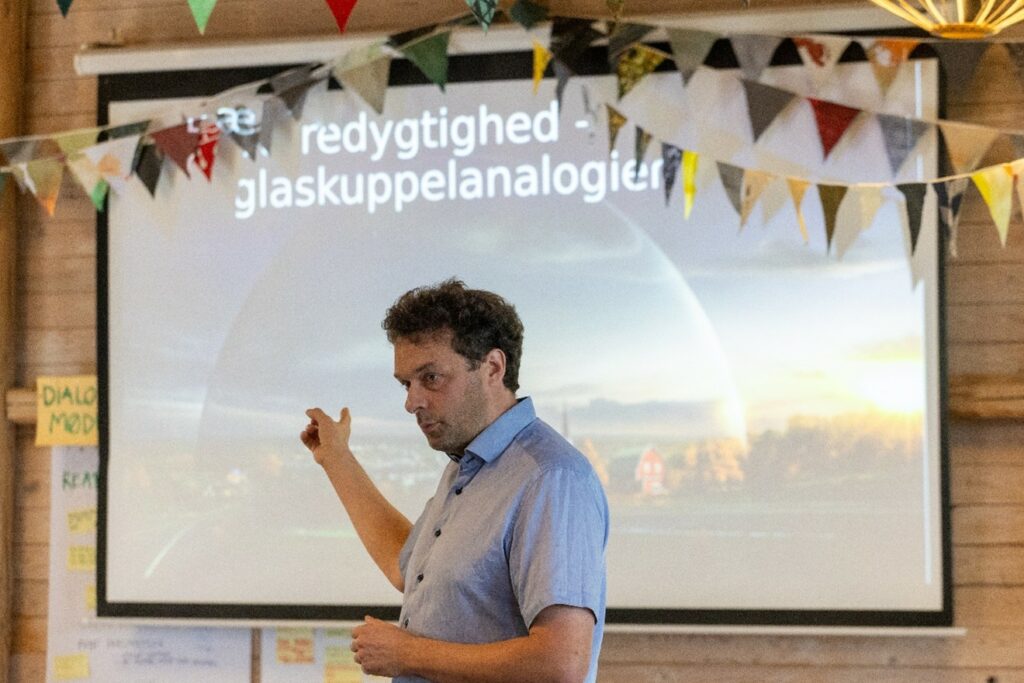
The concept of sustainable development – the “glass dome” analogy
Harmsø defined sustainability as the ability of a closed system to function without external energy sources other than solar energy. The essence of sustainability is green energy, circularity, and waste minimisation: “The sustainability of this subsystem is directly proportional to how long you want to stay under this dome”.
Settlement and housing
Permatopia combines various forms of ownership and use: ownership, cooperative, and rental homes—supplied by shared infrastructure (cold/hot water, heating, rainwater and wastewater collection/treatment). The homes prioritise bio-based materials and high insulation. Design challenges include overheating in summer and insufficient mechanical ventilation in highly airtight homes.
Community energy system – wind + heat pumps + low temperature distribution
Permatopia is powered by a refurbished 225 kW wind turbine and central heat pumps. A large ammonia heat pump (~300 kW) provides underfloor heating at 35–40°C; hot water is produced separately. Approximately 8.5 km of ground loops supply the main heat pump.
Hot Water Distribution – A Key Lesson
Centralised hot water production was causing excessive losses during distribution; the team now decided to decentralise domestic hot water distribution (e.g., by using instantaneous water heaters): “70 per cent of all the energy we ever produce… is lost during distribution”.
Electricity, self-consumption, network and tariffs
The turbine’s annual production roughly matches the community’s consumption, but sales are subject to price fluctuations during strong winds. Half of the energy produced is used for its own consumption, and the rest is sold. Regulatory and tariff structures limit internal division between plots: “In Denmark, it is not allowed to divide energy between plots”. From 1 January 2026, the community will be exempt from the electricity tax for two years.
Closed water and sewage circuit
Wastewater is treated in filter-lined willow beds; the willows are cut and composted to recover nutrients for the farm, thus closing the phosphorus and potassium cycle. Urine separation to retain nitrogen is planned, but this faces regulatory and operational obstacles: “We cut about ten tons of willow every year… and use it… as fertiliser for our farm”.
Agriculture and soil science
Heavy clay soils support the cultivation of brassicas (e.g., kale) more than potatoes; the project is adapting crops accordingly.
Management and finance
The shared systems are maintained within a cooperative structure resembling a company; because the infrastructure is owned by the company, mortgage financing is limited, which increases the costs of loans: “We’re a regular company… we have a board of directors and we have to pay taxes.” “We pay about 6% interest on all these system”. The wind turbine servicing cost is small relative to production; twice-yearly maintenance costs amount to about DKK 20,000 per year.
Why wind energy (and not solar energy)
Demand peaks in winter (space heating), which coincides with the seasonal wind profile. Limited solar energy can help, but capital costs and a higher amount of energy generated in summer reduce its value under current regulations: “We don’t need energy in summer”.
Stevns Klint Experience Center
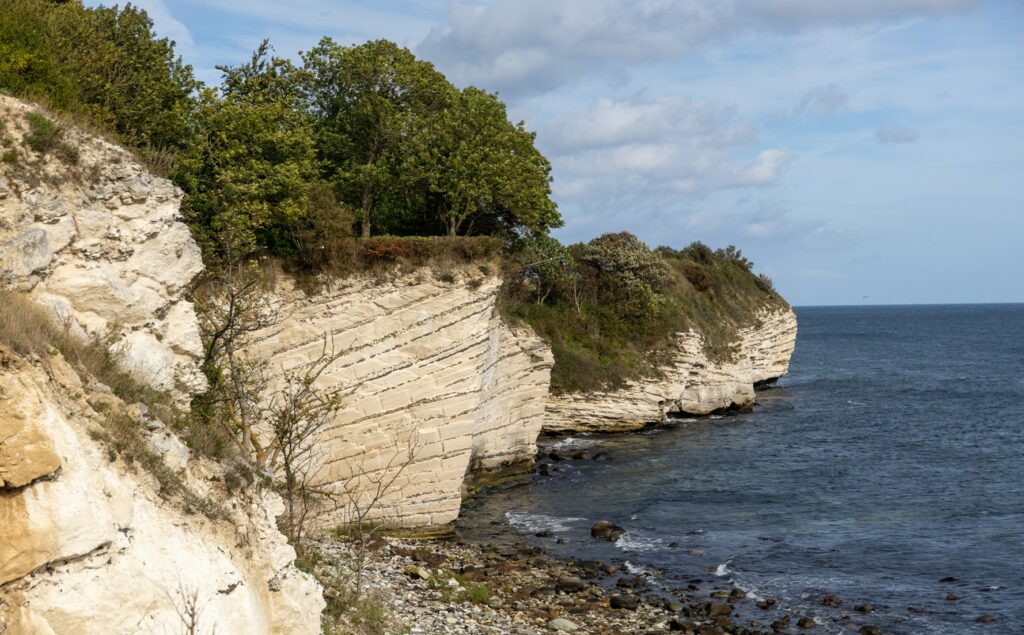
The second presentation was held in Stevns Klint, described as the most beautiful cliff in the Baltic Sea. Stevns Klint is a stretch of white limestone cliffs on the island of Zealand (Stevns municipality). It is approximately 15–17 km long and up to ~40–41 m high. The site is famous for its very well visible Cretaceous–Paleogene (K–Pg) boundary – a thin layer of clay with iridium, a trace of the Chicxulub asteroid impact ~66 million years ago, which is associated with a mass extinction (including that of dinosaurs). In 2014, the cliff was added to the UNESCO World Heritage List.
8. Sten Mortensen – Process, role of stakeholders and citizens, status.
Steen Mortensen, a veterinarian, doctor of epidemiology, president of the new energy community Sydstevns Energifællesskab[5], which will begin its operation in October 2025. The initiative was created after local residents adopted Danish legislation allowing communities to share their own electricity. The meeting took place at the Education Centre in Stevns Klint.
Vision and ambition
The energy community’s ambition is to achieve local self-sufficiency in green electricity in the Stevns municipality, which consists of 16 towns. This means switching households from gas and oil heating to heat pumps, while meeting the growing demand for electricity through the use of solar, wind and geothermal sources: “It is written in the statute that we want to realise the ambition of self-sufficiency in green electricity in the municipality of Stevns”. Each of the 98 municipalities in Denmark has adopted a local document on achieving self-sufficiency and/or climate neutrality [BK].
Philosophy and principles
The community’s guiding principles emphasise reducing consumption, producing locally, sharing surplus energy, and using energy storage solutions to balance supply and demand: “Save energy, if you can… generate your own solar power, own a battery, and share surpluses with neighbours through the energy community”.
Regulatory innovations
A key innovation in Danish law now allows energy communities to set their own internal electricity prices, bypassing traditional market constraints: “We don’t need anyone to tell us market prices… we establish prices ourselves”.
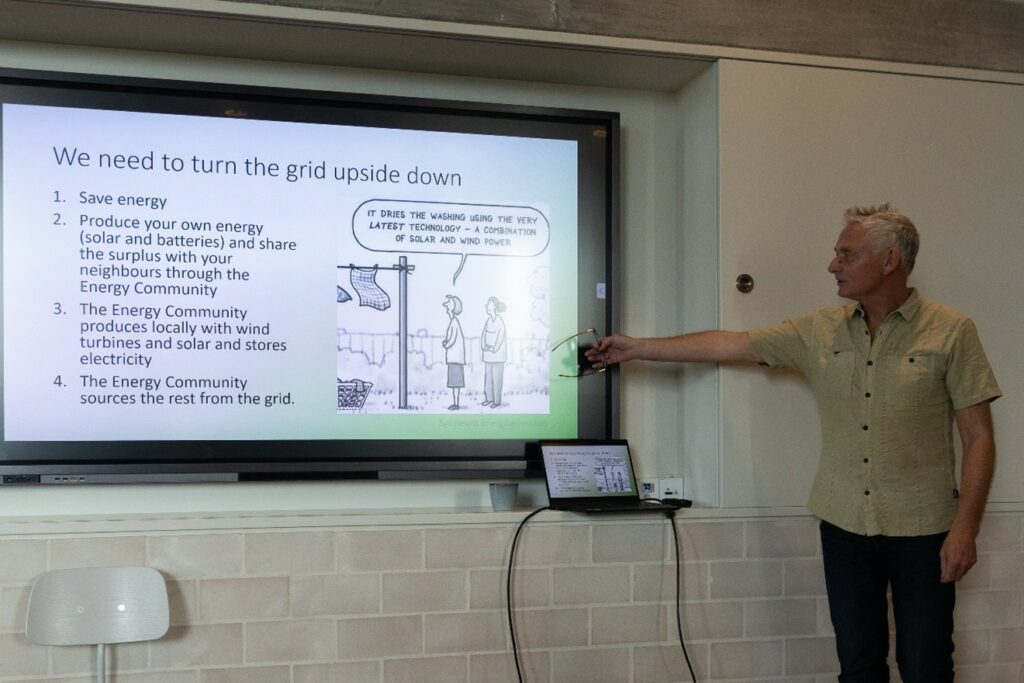
Planned activities
The first action plan includes local electricity trading, geothermal district heating systems, solar panels on large roofs, electric vehicle charging, and automation of energy consumption to match production: “We will start local electricity trading… we will create the first geothermal district heating systems… we will equip households with batteries and charging points for electric vehicles”.
Technology and data use
The introduction of smart meters reporting every 15 minutes is crucial to ensuring grid flexibility and balance. Local energy production and consumption can be adjusted more efficiently: “All meters in Denmark measure and send data hourly to a central server… and every 15 minutes from 1 October”.
Areas of activity
The Sydstevns Energy Community is developing four business areas: electricity sharing and responsibility for balancing, local production and storage with automation, heating solutions using a heating network and heat pumps, and new wind and solar projects: “We have four interconnected business areas. The first is electricity sharing… the second is own production, batteries, control, automation… the third is a heating network and heat pumps… the fourth is the future of wind and solar energy”.
Economic and social benefits
The community anticipates a significant impact on the local economy, estimating that local energy production and management will inject €12 million annually into the local economy from external energy suppliers: “transferring this to local ownership means €12 million of additional revenues for the regional economy annually”.
3. Irith Nor Madsen – the municipality of Stevns
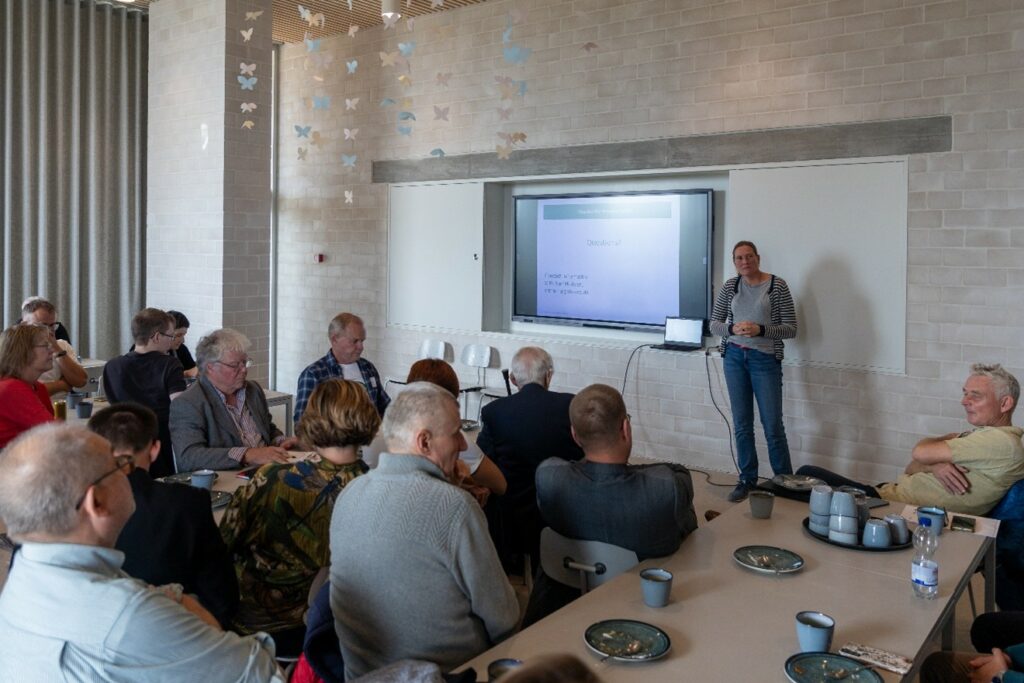
Climate Action Plan
In 2023, Stevns adopted a climate action plan based on the C40 framework (a global network of mayors of the world’s leading cities uniting in action to tackle the climate crisis) with 40 initiatives on CO2 reduction and climate change adaptation: “in 2023… we prepared a climate action plan for the municipality of Stevns … 40 initiatives that we are currently working on and monitoring the implementation of”.
Renewable energy ambitions
The municipality aims to be self-sufficient in the sphere of renewable energy by 2030 and to become an exporter of green electricity by 2050. This requires increasing production from 33 GWh to 150 GWh by 2030: “one of these initiatives concerns our ambition to be self-sufficient in renewable energy by 2030. And by 2050, we want to export green electricity from Stevns”.
Required infrastructure
Achieving the 2030 target requires building 12 large wind turbines or 175 hectares of solar parks, or a combination of both: “This is equivalent to having 12 wind turbines… or 175 hectares of solar parks, or a combination of both”,
City planning
The 2025-2029 city plan sets guidelines for renewable energy projects, identifying “negative” areas (where no projects can be implemented), neutral areas (requiring a case-by-case assessment) and updating rules for wind turbines.
Spatial and legal restrictions
Several constraints complicate development: cultural and natural landscapes, Natura 2000 sites, coastal protection zones, and distance requirements from neighbours (four times the turbine height). These significantly limit the available locations: “The legislation sets rules saying that the distance from neighbours must be four times the height of the wind turbine. Well, there isn’t enough space in this part of Denmark”,
Grid capacity challenges
Even with suitable locations, network constraints and long connection delays (up to 3-5 years) remain a significant obstacle: “The plan implementation is delayed, and sometimes you have to wait three, four, or five years to get access to the grid. So it’s a huge challenge”.
Citizen involvement and compensation
The municipality prioritises shared ownership, profit sharing, and compensation mechanisms, such as the Greenpool programme, in which developers provide funding for local community projects: “It was also important… to support local actors… to prioritise projects that engage and compensate affected local communities, and to work on opportunities for shared ownership or profit sharing”.
Political and administrative challenges
The planning process involves political decisions about prioritising projects, ensuring citizen involvement, and managing the municipality’s limited resources: “There are many things we need to consider… how many projects can we work on simultaneously? Stevns is not a large municipality, so our resources are limited”.
[1] ↑ https://greenpowerdenmark.dk/nyheder/energifaellesskabet-avedoere-vinder-green-power-prisen-2025
[2] ↑ Abitz, A., Frøslev, A. H., Andersen, M. E. W., & Hansen, T. H. (2025). Skabelse af energifællesskaber i landdistrikterne: En case rapport om Sydstevns Energifællesskab.
[3] ↑ See https://www.rescoop.eu/
[4] ↑ See https://okosamfund.dk/
[5] ↑ Abitz, A., Frøslev, A. H., Andersen, M. E. W., & Hansen, T. H. (2025). Skabelse af energifællesskaber i landdistrikterne: En case rapport om Sydstevns Energifællesskab.